|
||
|
|
TAKE ACTIONTravel Management Planning on the Prescott National ForestTalking Points to Help Me Write Comments
Due to a large increase in motorized use on national forests, the U.S. Forest Service issued the 2005 Travel Management Rule in attempt to reign in the damaging effects of unmanaged motorized recreation. The 2005 Rule requires that each national forest, after a thorough analysis of its transportation system, publish a Motor Vehicle Use Map (MVUM) by 2009. The MVUM, which indicates routes and areas open to vehicles, will make it the responsibility of motorized users to stay on legal trails. Unfortunately, the Prescott National Forest has decided to simply use the roads and motorized trails system they designated in 1989 for the 2005 Travel Management Rule. Using a 20-year-old system doesn’t seem like the best choice in order to protect the forest’s natural conditions under today’s circumstances. In fact, a study done in 1999 found that the number of Americans using off highway vehicles (OHVs) increased from 5.3 million in 1979 to 28 million in the late 1990’s (Bowker et al., 1999). The Arizona Wilderness Coalition is concerned that the Prescott National Forest is planning to include certain provisions that are contrary to the intent of the 2005 Rule and could impact wilderness areas and roadless areas. Specifically, we are concerned the forest will leave thousands of acres open to cross country travel by creating 600’ wide motorized camping corridors on all open roads outside of Prescott Basin. Additionally, the Prescott National Forest is considering allowing cross country travel on most of the forest for motorized big game retrieval. Now is the time to let Alan Quan, Prescott National Forest Supervisor, know that you support a balanced Travel Management Plan, not just a map. The plan should provide visitors with appropriate access, prohibit the degradation of wilderness and roadless areas from cross country exceptions, protects wildlife habitat, and respects our opportunities for quiet recreation.
Key Talking Points for Letters
Wilderness and Inventoried Roadless Areas: The Travel Management Plan should take into account all existing wilderness and inventoried roadless areas (IRAs) and make sure that their ecological integrity is protected. This will include ensuring that any cross country exceptions such as motorized dispersed camping and motorized big game retrieval (see below for details) are not allowed to occur within designated wilderness and do not create new routes within inventoried roadless areas. Please remind the Forest Supervisor that he is responsible, by law, for preventing motorized travel in wilderness areas and to prohibit new roads from being created in inventoried roadless areas.
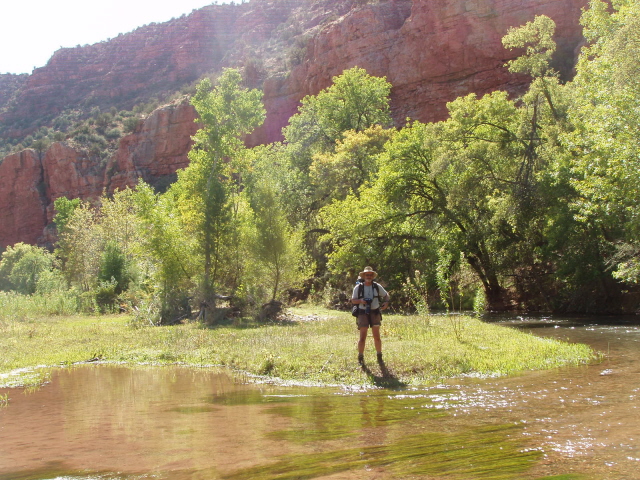
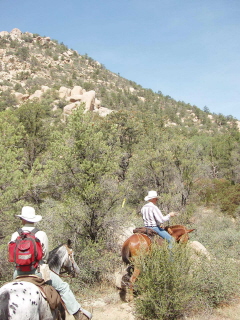
Quiet Recreation: The travel plan should preserve our quiet recreation activities. According to a 2007 Visitor Use Survey of people visiting the Prescott National Forest less than 10% of forest visitors participate in motorized recreation, while over 86% participate in activities associated with quiet recreation including hiking, wildlife viewing, horseback riding etc. Please tell the Forest Supervisor that you appreciate the quiet recreation opportunities the Forest provides and you would like them preserved. Dispersed Motorized Camping Corridors: The Forest intends to allow vehicles to travel cross country up to 300 feet from each side of all open roads, except along the open roads within one specific area known as Prescott Basin. This is completely contrary to the intent of the Travel Management Rule which to restrict cross country travel to prevent resource damage. Forest Service written guidance directs managers to use this strategy “sparingly to avoid undermining the purposes of the travel management rule…” (FSM 7703.11). Also Forest Guidance indicates that a complete cultural resource survey is necessary before designating motorized dispersed camping corridors to avoid destruction of archeological sites. One National Forest in Arizona determined that this would cost hundreds of thousands of dollars! We advocate that campers park off designated routes a safe distance (usually one car length) or use the many already existing primitive campsites that most folks use anyway. There is no reason to allow cross country travel that will ultimately turn thousands of acres of relatively undisturbed forest into a maze of eroding trails to nowhere. Please ask the Forest Supervisor to adhere to the Forest Service’s own guidance and designate dispersed camping corridors “sparingly”. State that 600 foot wide corridors are too wide as they encourage abuse by off-road vehicles. Also ask that a complete cultural resource survey is completed prior to designating any motorized dispersed camping corridors.
Motorized Game Retrieval: Currently the Prescott National forest only allows retrieval of big game only with a special permit. The Forest is considering changing that provision to allow for cross country travel to retrieve game, perhaps up to one mile from open roads. Forest Service written guidance directs managers to provide exemptions for motorized game retrieval "sparingly" (FSM 7703.12). However, AZ Game and Fish Department (AGFD), is pressuring the Forest to allow for motorized game retrieval for up to one mile from any existing road for specific big game and seasonal hunts. We are convinced that, other than allowing some limited provisions for mobility impaired hunters, motorized game retrieval is unnecessary, unenforceable, and disruptive to wildlife and other hunters. In 2006, AGFD conducted a statewide survey of active hunters that found that disruption caused by ORVs was among the top four "barriers to participating in hunting" in Arizona. In fact 54% of the respondents indicated that disruption caused by ORV use was a significant barrier to their participation in hunting. Arizona is the only western state that is even considering a motorized game retrieval provision for non-impaired hunters. Finally, consider that the Grand Mesa National Forest in Colorado recently decided to rescind a motorized game retrieval provision after finding it to be frequently abused and generally unenforceable. Ask the Forest Supervisor to prohibit motorized game retrieval with an exception only for mobility impaired hunters.
Quality Wildlife Habitat: The preponderance of scientific research indicates that in order to provide quality habitat for most wildlife species motorized route densities should not exceed 1 mile per square mile. Ask that the Forest maintains a motorized route density of less than 1 mile per square mile, and that it not include large roadless areas, wilderness areas or wildlife quiet areas in its calculations. The entire Forest should be managed to provide quality wildlife habitat.
Create A Sustainable Motorized System: In 2005 the Prescott National Forest had a total of 1,897 miles of forest roads which would have required $5,324,856 of federal money to keep maintained (Road Accomplishment Report, USFS, 2005). The Forest received $902,000 for their operating and maintenance budget which left an annual maintenance backlog of $4,422,856. The upkeep of roads on the Forest is financially unsustainable, the effects of which are placed on the environment in the form of unstable soils, erosion and habitat fragmentation. Ask the Prescott National Forest to review their roads system and decommission any redundant roads and roads in ecologically sensitive areas such as riparian areas.
For more information, please contact Sam Frank with Arizona Wilderness Coalition, at 928-717-6076; sfrank@azwild.org.
|
  |